Cambridge City Council has launched a comprehensive programme of outfall surveys and water quality investigations across Cambridge's chalk streams, marking an important step towards identifying urban pollution sources and developing targeted measures to protect these precious freshwater habitats.
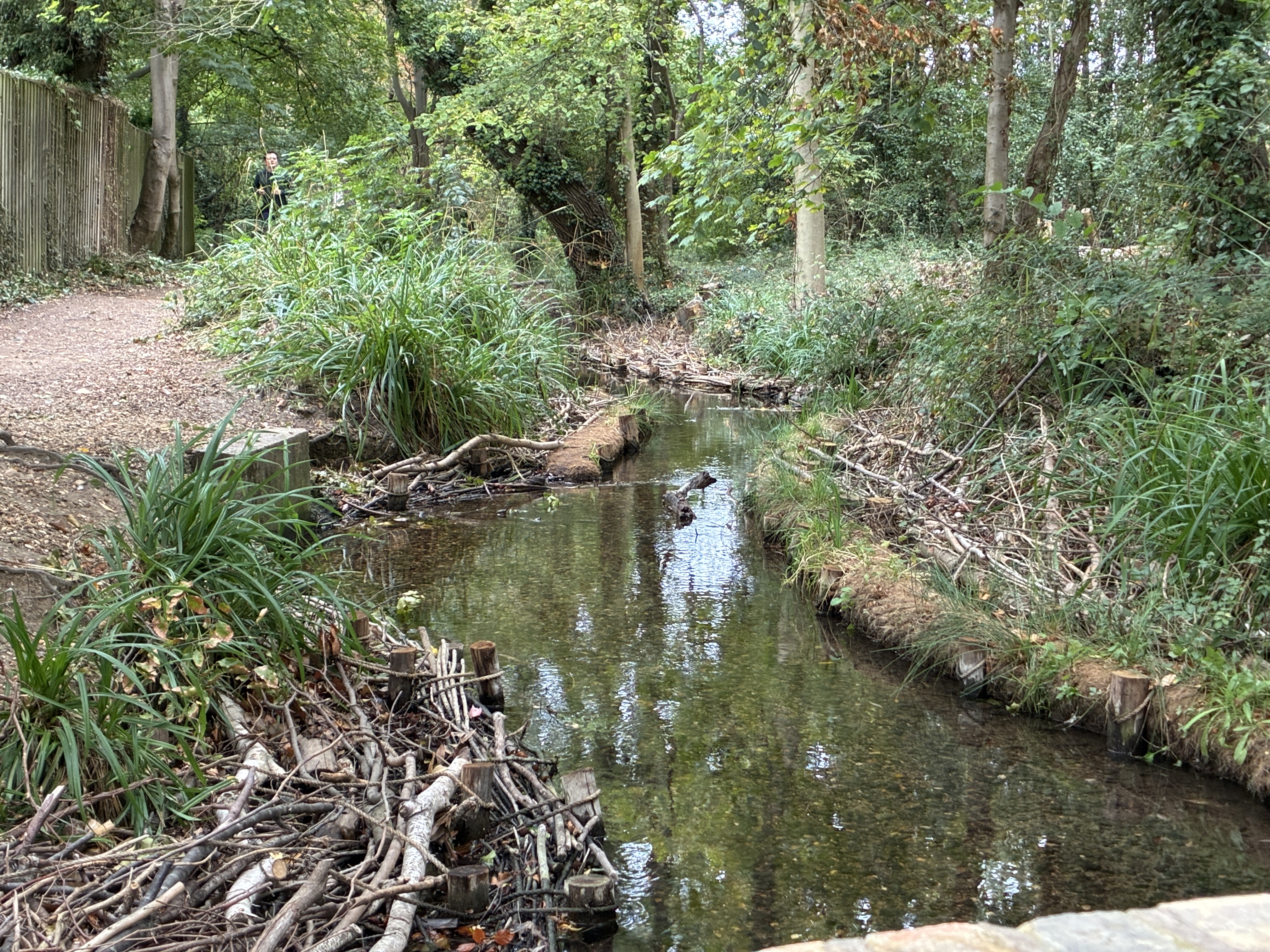
Specialist surveyors working on behalf of the Cambridge City Chalk Stream Project are surveying five of the city's watercourses from their springheads through to their connections with the River Cam:
- Cherry Hinton Brook
- Coldham's Brook
- East Cambridge Main Drain (ECMD)
- Hobson's Brook
- Vicar's Brook
The Cambridge City Chalk Stream Project, which is being officially launched in December, is a new project which follows on from the work of the previous Greater Cambridge Chalk Stream Project. This is a collaboration between the city council and Cambridge Water, and is being delivered with up to £1.9m funding from Cambridge Water’s Water Industry National Environment Programme.
Mapping the pathways of urban pollution
The surveys will identify and map all visible outfalls and drainage connections entering the chalk streams, such as pipes, culverts, surface water drains, drainage ditches and other discharge points, creating a comprehensive inventory of potential pollution pathways across the city's chalk stream network.
This will provide the project with an important baseline of data, helping investigators understand how water and potentially harmful pollutants enter the streams from surrounding roads, urban developments, industrial areas and other parts of the urban environment.
Investigating emerging urban pollutants
Alongside the outfall surveys, the council is undertaking an extensive programme of water and sediment sampling to investigate contaminants that may be affecting chalk stream water quality and biodiversity.
These investigations will help build a more detailed picture of pollution from urban runoff, including potentially harmful substances such as heavy metals, hydrocarbons, tyre-wear chemicals, and other organic contaminants.
Such investigations are particularly important because many urban contaminants can be toxic to the sensitive flora and fauna of chalk streams as well as disrupting aquatic food chains. Some pollutants can also accumulate in stream sediments, creating longer-term ecological pressures and potentially undermining the benefits of habitat restoration.
By examining both the water and the sediments within these streams, the project aims to understand where pollutants are entering, accumulating and potentially affecting aquatic life.
The findings will help establish which pollutants pose the greatest concern and where pollution mitigation measures could be most effective.
Designing nature-based solutions to protect biodiversity
A central aim of the investigations is to ensure that future chalk stream restoration is supported by effective pollution prevention and mitigation.
The project will use the evidence gathered to investigate and design targeted interventions, including constructed wetlands, vegetated drainage features and systems that capture sediment and organic material before polluted runoff reaches sensitive chalk stream habitats.
By identifying and intercepting pollution before it reaches the watercourses, the project aims to protect the most ecologically valuable habitats, improve conditions for aquatic plants, invertebrates and fish, and support the long-term recovery of Cambridge's chalk streams.
Building a healthier future for Cambridge's chalk streams
These surveys and investigations form part of the wider Cambridge City Chalk Stream Project's programme of scientific monitoring, habitat restoration and pollution mitigation.
The findings will inform future investment in targeted interventions, helping the council and its project partners prioritise measures that can deliver long-term improvements in water quality and biodiversity.
Cllr Martin Smart, Cabinet Member for Nature, Open Spaces and City Services, said: “Understanding how surface water moves through the city's drainage networks and enters our chalk streams is essential if we are to tackle urban pollution effectively.
"These surveys will provide us with a comprehensive picture of the drainage connections entering our watercourses, helping us identify potential pollution pathways and prioritise where further investigations and interventions are needed.
"This is about moving beyond simply identifying poor water quality. We want to understand the sources and pathways of pollution, investigate the contaminants that may be affecting aquatic life and use this scientific evidence to develop effective solutions.
"Chalk streams are among our most valuable and sensitive freshwater ecosystems. If we want our restoration work to achieve lasting ecological improvements, we need to address the pollutants entering these habitats, not simply restore the physical environment.
"By bringing together detailed scientific monitoring, drainage investigations and nature-based pollution mitigation, we have an opportunity to develop a much more effective approach to protecting Cambridge's chalk streams for future generations."