A version of this article by Cllr Katie Thornburrow, Leader of Cambridge City Council, was first published in Cambridge Independent on 26 August 2026.
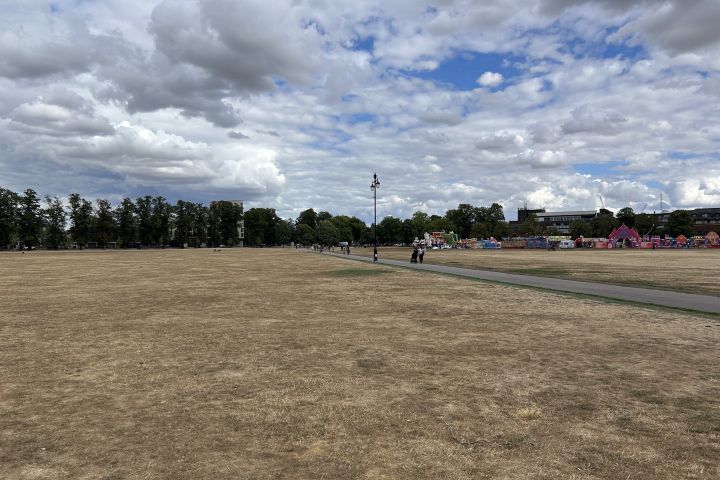
As leader of Cambridge City Council, I often find myself reflecting on issues that keep us up at night, not just as politicians, but as neighbours, parents, and members of a vibrant, interconnected community. And the recent hot weather, which has made it hard to sleep for many, has given me lots of time to consider connections between climate change and two of the issues which got me into politics in the first place – water and food.
Before I became a councillor I studied food policy and campaigned for food security. In 2024 the council’s support for the Cambridge Sustainable Food Partnership helped the city obtain a Gold Award from Sustainable Food Places, recognising Cambridge as leading the way in transforming food systems to better serve our communities, the environment and local economy.
However it was always clear water supplies in Cambridge were limited and precious, and the needs of farmers, developers and residents sometimes came into conflict. In 2019 I organised a water crisis forum with experts and local people to talk about how to get enough water to support the city as it developed, and the use of water for farming was one of the issues we discussed.
And now everyone is aware of how close the connection is, as farmers across the country are facing the loss of crops because of the drought accompanying the extreme hot weather. Crops are failing to reach normal growth levels, and farmers are struggling to hit environmental targets tied to government funding. Farmers with livestock are also facing difficulties – I heard one on the radio explaining he was feeding cattle the food that should have been for the winter, because the grass isn’t growing to feed them through the summer.
I was pleased the government announced emergency support for farmers facing this severe drought. It is a welcome and necessary intervention because prolonged heatwaves and dwindling water supplies has a massive impact on agriculture. But while financial lifelines help keep farm businesses afloat in the immediate term, we must be honest about climate change. Emergency aid for a single dry season is a temporary patch; our real focus must be on long-term resilience.
Earlier this year the Cambridge Room and Cambridge Resilience Web organised a series of discussions about the city’s ability to cope in an emergency, and we talked about our food supply. A striking takeaway was how little direct government support or statutory framework exists for food growers, despite food security being as fundamental to our well-being as energy or building materials.
Our current food system is highly complex, centralised, and reliant on 'just-in-time' deliveries. Neither major supermarkets nor small local stockists hold significant reserve storage anymore. When supply chains fracture, whether due to extreme weather, geopolitical shocks, or transport disruptions, it is the most vulnerable people in our communities who suffer first and hardest. We cannot simply cross our fingers and rely on fragile, distant supply lines - we need to treat local food infrastructure as critical national priority, just like water or electricity supply.
Here in Cambridge, we have already laid strong foundations. Our Gold Sustainable Food City status has helped embed sustainable local food sourcing into our planning policies, supported independent food businesses, and helped residents gain practical cooking skills. During the Covid pandemic we learned vital lessons about protecting our neighbours, rapidly scaling up our network of community food hubs from three to 10 in the city to ensure nobody was without basic necessities. I hope we remember those lessons.
Community initiatives work best with support from government, and one way that can be done is through apparently dry documents like planning rules. The government recently published updates to the National Planning Policy Framework (NPPF), but apart from the coverage of moves to allow more development near transport hubs like rail stations, it is unlikely to make headlines.
As the cabinet member for planning I read the whole thing, and it has some really good news if you’re interested in planning for sustainable development. For example, local authorities were given clear support to enforce tighter water efficiency standards in areas experiencing serious water stress, like East Anglia.
This is already a planning priority, and the emerging Greater Cambridge Local Plan – which covers Cambridge and South Cambridgeshire where there is a lot of high-grade farmland – will be asking developers to put forward plans for the highest water-efficiency standards in the country. For new residential developments of 100 homes or more, we are looking to set the ambitious target of 80 litres per person per day.
Achieving this will require housebuilders to integrate greywater recycling and rainwater harvesting into home designs, helping us conserve our precious local chalk streams and underground aquifers - and now we have a national policy to back us up.
Managing our water and safeguarding our food supply are two sides of the same coin. Extreme weather events are no longer temporary anomalies but our new baseline. Emergency bailouts for crop failures offer momentary relief to farmers and shoppers, but true security comes from structural reform, smarter planning, and supporting local supply chains. By acting decisively across local, regional, and national government, we can ensure Cambridge remains a resilient, fair, and sustainable city for everyone.