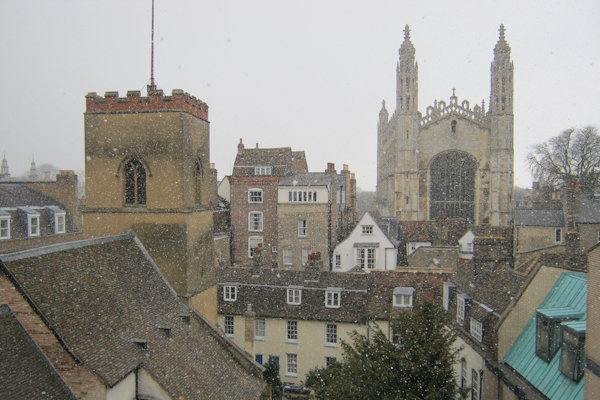
Cambridge's historic city centre is set for a major transformation after councillors approved plans to secure the long-term future of the Guildhall, Corn Exchange, Market Square and surrounding public spaces – collectively known as the Civic Quarter.
The decision at Full Council (26 November) means the programme of work will be able to start in January 2027, with the planned improvements set to protect the three historic sites, make them more accessible and sustainable, and create a more welcoming city centre.
Cllr Katie Thornburrow, Leader of Cambridge City Council, said: “As the owners and stewards of these three heritage sites we are responsible for their upkeep and are committed to caring for them and preserving them as public spaces for future generations.
"The Guildhall, Corn Exchange and Market Square all need major work if they are to continue serving the city, but this costs money. While new investment of £89.4 million for work on all three is significant, the council expects to break even over a 30 year period, paid for primarily by the income generated through the improvements to the three sites. We will also retain ownership of three valuable assets.
“The work we will carry out will modernise the three sites to make them more open to the community, more accessible, and more energy efficient in line with our net zero target.
"We looked at what would be required if we only wanted to make the sites compliant with current regulations. This would cost £69 million but doing only the minimum required would actually cost the council more over the planned 30 year period because it wouldn't provide any additional income. The agreed investment allows us to make substantial improvements to the three sites, enabling us to generate higher levels of rental income.
“Doing nothing was simply not an option, and would leave the council with deteriorating heritage buildings that we would still be responsible for maintaining, while the potential sale value of the Guildhall would decrease as the building condition worsens, and delaying making a decision would just see these inevitable costs rise further. By pursuing a programme of works for the three sites within the Civic Quarter in one coordinated programme, we are reducing costs as much as possible compared to refurbishing each site in isolation.
"The council has a lot of experience delivering high value contracts using the best cost consultants and implementing robust checks and balances. We have also shown we can successfully deliver complex city-centre regeneration projects while creating long-term value for residents – with recent success in the £80 million redevelopment of Park Street car park, and with our housebuilding partnership, Cambridge Investment Partnership, currently managing development contracts totalling £115 million.
“This important project will secure the civic heart of Cambridge for future generations and I look forward to seeing it move forward.”
Why action is needed
At the Guildhall, surveys identified issues including water damage, a deteriorating roof, ageing electrical and fire safety systems, corroding heating infrastructure and concerns about parts of the building fabric. Without major refurbishment, maintenance and compliance issues would continue to put more parts of the building out of use. Parts of the Guildhall are also inaccessible to wheelchair users, including parts of the Council Chamber itself.
The Corn Exchange requires significant investment to replace its roof, improve ventilation, accessibility and energy efficiency, and modernise facilities to ensure performers and audiences can enjoy their experiences – safeguarding the Corn Exchange’s future as a leading music, entertainment and cultural venue in the East of England.
The Market Square also needs major upgrades to trader facilities, power supplies, lighting, as well as to the historic setts which make the ground uneven and the market inaccessible to anyone using a wheelchair or pushchair.
What will improve
The refurbishment will restore and protect the Grade II listed Guildhall while opening it up to wider public use. In addition to the investment needed to address the significant maintenance and compliance issues, improvements will include:
- step-free access and improved accessibility throughout, including access to areas of the council chamber that are currently inaccessible to wheelchair users
- improved energy efficiency through Enerphit-standard refurbishment, supporting the council’s net zero target and reducing long-term running costs for taxpayers
- improved public facilities, including public toilets and customer service centre
- enhanced community, event and conference spaces to help open the building up to more residents and organisations, and generate income for the council
- modern office space that can be used flexibly by the council, or commercial tenants to generate income for the council
The refurbishment has also been designed to ensure the Guildhall can adapt to the requirements of any future unitary council – including flexible office space and an adaptable council chamber large enough for a unitary council to meet if desired.
The Corn Exchange refurbishment will provide a replacement roof, addressing one of the building's most significant maintenance issues. The refurbishment will also:
- improve accessibility throughout the building
- provide better ventilation and temperature control to enhance the experience of performers and audiences
- increase the number of visitor toilets and provide better backstage catering facilities
- upgrade the food and drink provision for audiences
- ensure better energy efficiency and lower operating costs
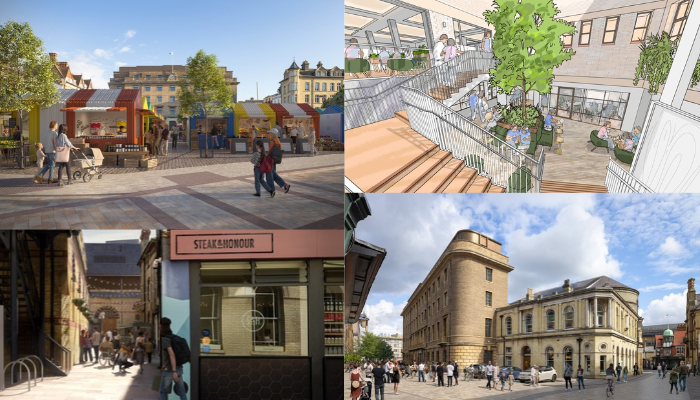
The project will also deliver major improvements to Cambridge Market and surrounding public spaces. The council's current proposal is for the market to continue trading from nearby city-centre streets while work takes place in Market Square, reflecting traders' preference to stay as close to the Market Square as possible rather than moving together to a single temporary site. A planning application for the temporary market arrangements is due to be considered by the council's Planning Committee on 2 December. Improvements will include:
- refurbished market stalls with improved power and lighting
- upgraded facilities for traders including toilets and bin storage
- relaying the surface to conserve the historic setts, while improving accessibility for wheelchair users, people with mobility impairments and those using pushchairs
- better seating, lighting and public spaces
- measures to reduce anti-social behaviour
- a more attractive and welcoming city-centre environment, with greater flexibility for events, community activities and public gatherings
Mike Coleman, Operations Director Special Projects, Sir Robert McAlpine, Main Contractor, said: "Sir Robert McAlpine are delighted to be part of the project family preparing the Cambridge Civic Quarter to serve the community of Cambridge for future generations. The adaptive reuse and conservation of these assets will enable new life to be breathed into the Guildhall, for the Market Square to be a cultural focus and for the Corn Exchange to better serve as East Anglia’s premier concert venue."
David Roberts, Director of Cartwright Pickard, Lead Architect, said: “We are delighted that the Civic Quarter programme has been given the green light and are proud to continue our partnership with Cambridge City Council on this transformative project. The proposals balance respect for Cambridge’s remarkable heritage with thoughtful, sustainable design, securing the future of the Guildhall, Corn Exchange and Market Square while making them more accessible, welcoming, and adaptable for generations to come. Sustainability has been central to our vision for the Civic Quarter. The Guildhall proposals align with the UK Net Zero Carbon Buildings Standard, with a focus on reducing operational energy use and upfront embodied carbon. The project is designed in line with EnerPHit principles adapting the historic building for the future while retaining its character.
“Together with the council and the wider design consortium, we have developed a coordinated vision that will breathe new life into these important public spaces. From reducing energy use in the historic buildings to improving the market and surrounding public realm, the project will create a more inclusive and vibrant Civic Quarter for the council, residents and visitors alike. We look forward to seeing this ambitious vision move into the delivery phase.”
Supporting Cambridge's future
The council considered a range of alternatives, including carrying out only the work needed to meet basic compliance requirements. However, councillors concluded that a more comprehensive programme would provide significantly greater long-term value by making the buildings accessible, adaptable and energy efficient, reducing future operating costs, creating opportunities for additional income and ensuring these important public assets can continue serving the city for decades to come.
The improvements are also expected to strengthen the long-term financial sustainability of the buildings through lower running costs, new commercial income opportunities and facilities that can support a wider range of uses and events.
The decision gives residents certainty about the future of some of Cambridge's most important public assets, ensuring the Guildhall, Corn Exchange and Market Square can continue serving the city for decades to come.
Project timeline
- January 2027 – start on site and enabling works begin.
- January to April 2027 - subject to planning approval, market traders will gradually begin to relocate to temporary city-centre locations where they will continue to trade throughout the Market Square works.
- March 2028 - Market Square works expected to complete.
- Summer 2028 - Corn Exchange refurbishment expected to complete.
- December 2028 - Guildhall refurbishment expected to complete.
- August 2029 - wider public realm works across the Civic Quarter expected to be completed.